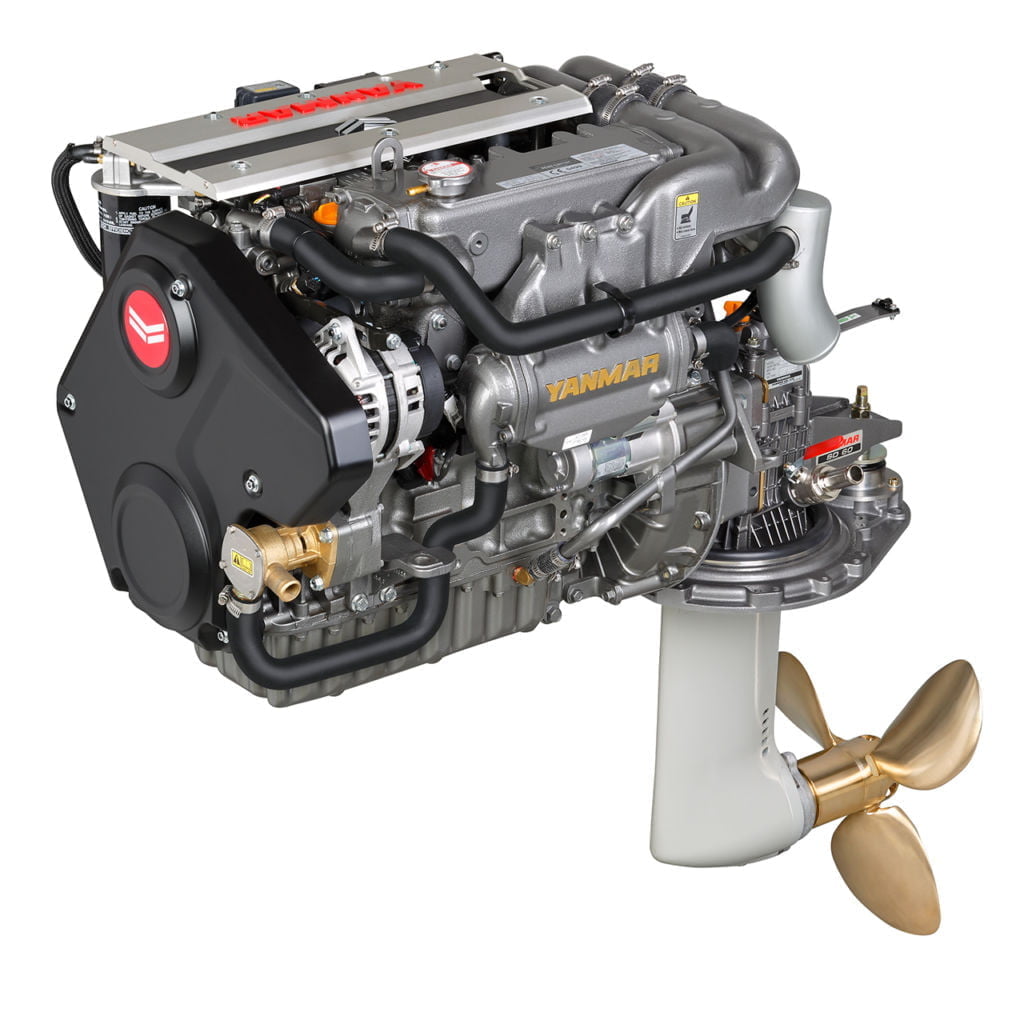
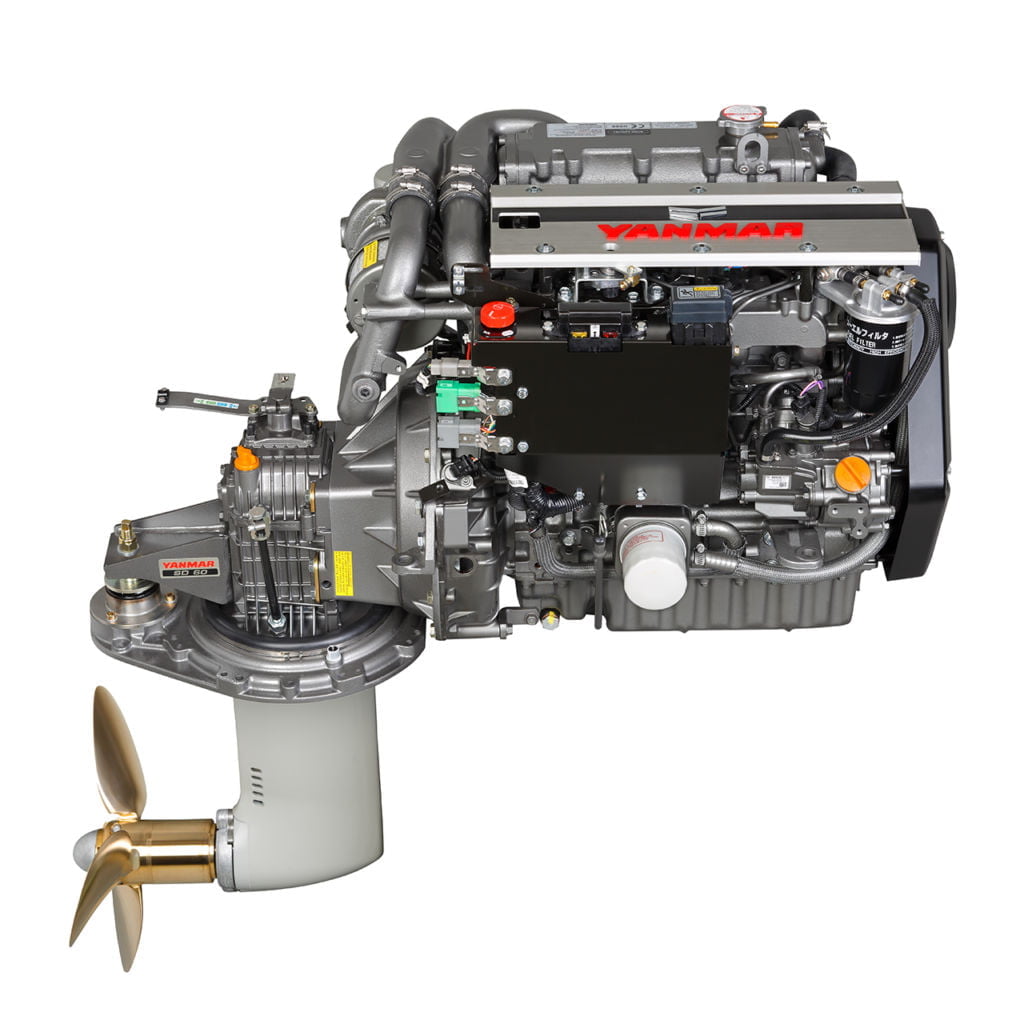
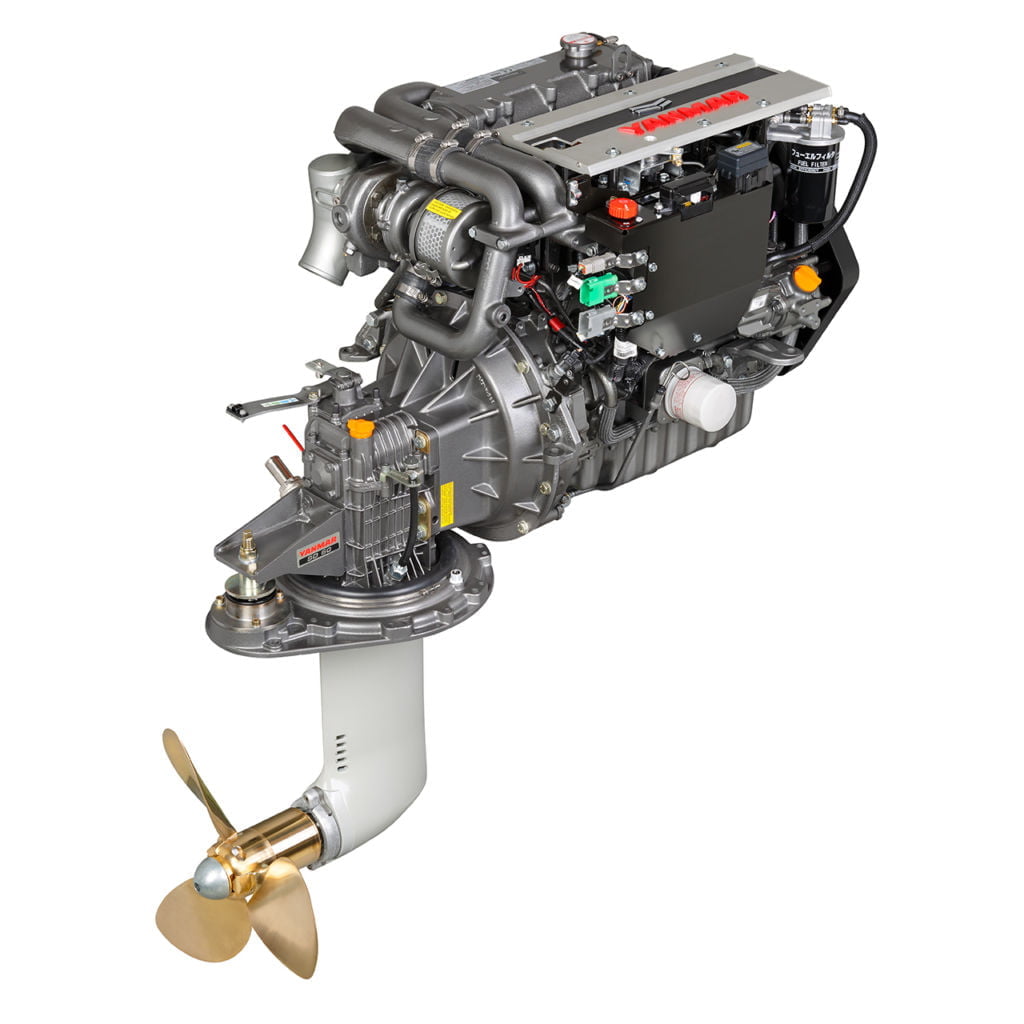
Yanmar 4JH80: The High-Performance 80hp Marine Diesel Engine
Compact, powerful, and turbocharged reliability for demanding applications from sailboats to catamarans.
Introduction
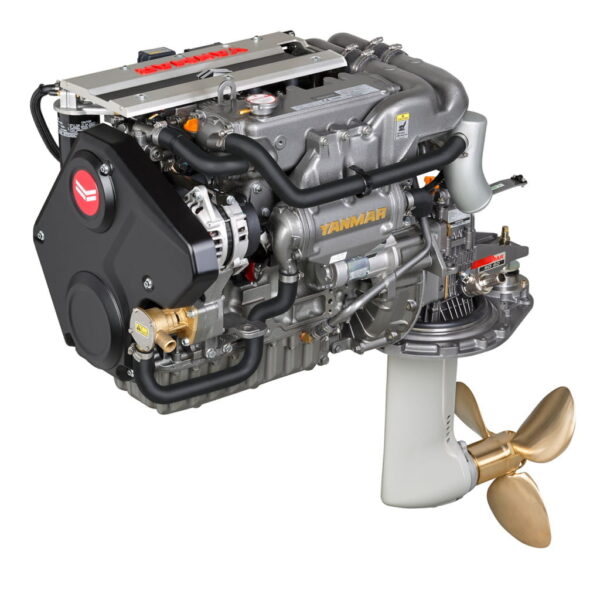
When performance and space are both at a premium, you need an engine that delivers maximum power from a minimal footprint. The Yanmar 4JH80 is engineered for exactly this purpose. At Wave Inboard Motors, our extensive experience with the entire 4JH series has shown us that the 4JH80 stands apart as the high-output champion, providing a level of power typically found in larger, heavier engines. Its turbocharged and after-cooled design, backed by Yanmar’s global reputation for reliability, makes it a top choice for a high-performance marine engine repower.
This 80hp powerhouse is the ideal solution for heavier sailboats, performance cruisers, and catamarans that require robust auxiliary power to maintain schedules in strong currents and headwinds. Its high power-to-weight ratio and compact dimensions also make it a perfect twin-engine installation for powering mid-size catamarans, providing exceptional maneuverability and redundancy. For owners who refuse to compromise on power, the Yanmar 4JH80 offers a trusted, engineering-driven solution.
On this page, we’ll leverage our hands-on expertise to provide a comprehensive analysis of this modern workhorse, from its detailed specifications to a clear-eyed view of its place in the current market.
Technical Specifications Table
Ideal Vessels for the Yanmar 4JH80:
-
40-50 Foot Heavy Sailboats (e.g., Tartan, J/Boats, Swan) – ideal for a high-performance sailboat repower.
-
38-45 Foot Catamarans (as a twin-engine installation)
-
Mid-Size Downeast Boats & Lobster Yachts
-
Heavy Displacement Pilothouse Sailboats
Competitor Comparison Table
Verdict: The Yanmar 4JH80 wins on compactness and high-RPM power density, making it the undisputed choice for installations where every inch and pound counts. The Volvo Penta D2-75 is a strong, common OEM engine, but can be costlier to maintain. The Beta Marine 85, while heavier and larger, produces its power at a much lower RPM, generating massive torque that can be preferable for the heaviest displacement hulls. For most sailboats and catamarans, the Yanmar’s power-to-weight and size advantages are decisive.
Replacement Options Table
Expert Recommendation: For a high-performance engine like the 4JH80, which relies on precise turbocharger and fuel injection operation, our strong recommendation is almost always a new repower. The complexity of turbo systems means a failure in a used or rebuilt engine can be catastrophic and costly. The value of a full factory warranty and a zero-hour engine, especially for demanding applications like catamaran installations, cannot be overstated. We always begin with a <a href=”/marine-engine-survey” title=”Marine Engine Survey”>marine engine survey and inspection</a> to assess the vessel’s readiness for this powerful upgrade.
Pros and Cons Table
Frequently Asked Questions (FAQ)
Q1: Is the Yanmar 4JH80 too much engine for my 40-foot sailboat?
A: It depends on your boat’s displacement and sailing goals. For a heavy 40-foot cruiser (over 20,000 lbs) or a performance boat that frequently motors into headwinds and currents, the 4JH80 provides reserve power that enhances safety and control. For a lighter boat, the 4JH57 may be sufficient. Our <a href=”/marine-engine-survey” title=”Marine Engine Survey”>marine engine survey</a> can determine the ideal horsepower.
Q2: How does the turbocharger affect maintenance and longevity?
A: A turbocharger adds moving parts and requires clean, uninterrupted oil flow. Proper maintenance—especially timely oil and filter changes—is critical. However, when cared for, modern marine turbochargers are highly reliable and provide a significant performance benefit without substantially reducing engine life.
Q3: This engine is a popular choice for catamarans. Why?
A: Its compact size allows it to fit in the confined engine rooms of a catamaran, while its high output provides excellent speed under power. Using two 4JH80 engines offers superb maneuverability and the crucial redundancy that catamaran owners value for offshore passages.
Q4: Can I reuse my existing 2-inch propeller shaft with this engine?
A: Possibly, but it must be evaluated by a professional. The 4JH80 transmits significant torque. A <a href=”/drivetrain-stern-gear” title=”Drivetrain and Stern Gear”>marine drivetrain and stern gear specialist</a> must inspect your entire system—shaft, strut, coupling, and propeller—to ensure it can handle the increased power. Failure to do so can lead to catastrophic driveline failure.
Building Authority & Internal Linking Strategy
The content above naturally incorporates our core services to build EEAT. To further establish authority, we would contextually link to these resources:
Within the article text, we naturally linked to:
-
Marine Engine Installation
-
Marine Engine Survey & Inspection
-
Marine Drivetrain & Stern Gear Services
-
Marine Propulsion System Alignment
Additional strategic links for this page would be:
-
In the vessel list, link to a service page: “For a twin-engine <a href=”/catamaran-engine-installation” title=”Catamaran Engine Installation”>catamaran engine installation</a>, trust our specialists.”
-
In the FAQ, link to a blog post: “For a deeper comparison, read our guide on <a href=”/turbocharged-vs-naturally-aspirated-marine-engines” title=”Turbocharged vs Naturally Aspirated Marine Engines”>Turbocharged vs. Naturally Aspirated Marine Engines</a>.”
-
In the competitor comparison, link to a brand page: “Explore our full range of <a href=”/beta-marine-engines” title=”Beta Marine Engines”>Beta Marine engines</a> for high-torque options.”
-
In the conclusion, link to a broader topic: “Understanding the full process is key; learn more about <a href=”/marine-repowering-process” title=”Marine Repowering Process”>The Marine Repowering Process</a> on our blog.”







Reviews
Clear filtersThere are no reviews yet.